Technology

Discover Emerging Technologies That Shape the Future of Innovation
Innovation has become one of the biggest drivers of competitive advantage. Every year, thousands of new technologies, startups, patents, and research breakthroughs emerge across industries, creating opportunities for organizations to develop better products, optimize operations, and enter new markets. The challenge, however, lies in identifying which innovations deserve attention and which are unlikely to create long-term value.
Many organizations struggle to keep pace with rapidly evolving technologies. Internal R&D teams are often focused on existing projects, while valuable innovations continue to emerge from startups, universities, research institutions, suppliers, and adjacent industries. Without a structured approach to monitoring these developments, businesses risk overlooking breakthrough technologies, investing in outdated solutions, or spending valuable time developing capabilities that already exist elsewhere.
Technology scouting provides a systematic approach to discovering, evaluating, and monitoring emerging technologies with the potential to create measurable business impact. By combining technology intelligence, market research, competitive analysis, and innovation consulting, organizations can make informed decisions about technology adoption, partnerships, investments, and future innovation strategies.
Whether the objective is to strengthen an R&D pipeline, identify disruptive technologies, discover new materials, evaluate startup ecosystems, or uncover licensing opportunities, technology scouting enables organizations to transform innovation insights into strategic business decisions.
What is Technology Scouting?
Technology scouting is the structured process of identifying, assessing, and evaluating emerging technologies, research developments, startups, and innovation opportunities that align with an organization’s business objectives.
Unlike traditional market research, which focuses primarily on customer demand and market trends, technology scouting examines the innovation ecosystem itself. It identifies technological advancements before they become mainstream, helping organizations understand their technical feasibility, commercial potential, implementation challenges, and strategic relevance.
A comprehensive technology scouting program combines insights from multiple sources, including scientific publications, patent databases, startups, universities, corporate R&D, venture capital activity, government-funded research, industry reports, and innovation networks. The objective is not simply to discover new technologies but to determine which innovations can solve existing challenges, create competitive differentiation, improve operational efficiency, or unlock future growth opportunities.
Technology scouting has become an essential component of innovation management, product development, digital transformation, corporate strategy, and research and development across industries.
Why Technology Scouting Matters
Technology is evolving faster than ever before. Artificial intelligence, advanced materials, industrial automation, biotechnology, sustainable manufacturing, semiconductor innovations, clean energy solutions, and digital infrastructure continue to transform industries at an unprecedented pace.
At the same time, innovation is no longer confined to large corporations. Many groundbreaking technologies now originate from startups, university laboratories, research institutes, and interdisciplinary collaborations spread across the world. Keeping track of these developments requires far more than occasional market research or competitive monitoring.
Organizations that rely solely on internal expertise often face several challenges:
- Limited visibility into external innovation ecosystems
- Difficulty identifying technologies outside their core domain
- Longer product development cycles
- Missed collaboration opportunities
- Higher R&D costs
- Increased uncertainty during technology investments
Technology scouting addresses these challenges by providing a structured framework for continuously monitoring emerging innovations, evaluating their relevance, and translating technology intelligence into informed business decisions.
Rather than reacting to technological disruption after it occurs, organizations can proactively identify opportunities, assess potential risks, and build innovation strategies that support long-term growth.
Key Benefits
An effective innovation scouting program provides far more than a list of emerging technologies. It delivers strategic intelligence that enables organizations to innovate with greater confidence, reduce uncertainty, and accelerate business growth.
-
Accelerate Innovation
Identifying existing technologies, external expertise, or potential collaborators allows organizations to reduce development timelines and bring innovative products to market more efficiently.
-
Strengthen Research & Development
Technology scouting complements internal R&D by expanding access to scientific discoveries, emerging technologies, and cross-industry innovations that may otherwise remain undiscovered.
-
Improve Technology Investment Decisions
Every technology investment carries technical, commercial, and financial implications. A structured evaluation process helps organizations prioritize opportunities based on feasibility, maturity, business impact, scalability, and long-term value.
-
Reduce Innovation Risks
Early assessment of technology readiness, intellectual property, regulatory considerations, and competitive activity enables organizations to minimize uncertainty before committing significant resources.
-
Identify Strategic Partnerships
Many transformative innovations originate outside an organization. Technology scouting helps identify startups, universities, technology providers, suppliers, and research organizations suitable for partnerships, licensing, acquisitions, or joint development initiatives.
When Do Organizations Need Scouting?
Technology scouting supports organizations at different stages of innovation and business growth. While every engagement is unique, there are several situations where structured technology scouting creates significant value.

Developing New Products
Organizations launching new products often need to identify technologies that improve performance, reduce development time, or introduce differentiated capabilities.

Solving Complex Technical Challenges
Many engineering and R&D challenges require expertise beyond an organization’s existing capabilities. It helps discover external technologies that can accelerate problem-solving.

Monitoring Emerging Technologies
Organizations operating in rapidly evolving industries require continuous monitoring of technological developments to anticipate market changes and identify future opportunities.

Evaluating Build, Buy, or Partner Decisions
When deciding whether to develop a technology internally, acquire it externally, or collaborate with an innovation partner, scouting provides an objective understanding of available options.
The Technology Scouting Process
A successful program follows a structured methodology that transforms large volumes of scientific, technical, and market information into actionable business insights. Rather than relying on isolated research or trend monitoring, the process systematically identifies, evaluates, and prioritizes technologies that align with business objectives.
01
Define the Business Challenge
Every engagement begins with understanding the organization's objectives, technical requirements, market challenges, and innovation priorities. Clearly defining the problem helps establish the scope of the scouting exercise and ensures the search remains focused on technologies that address specific business needs.
02
Discover Emerging Technologies
The next stage involves exploring global innovation ecosystems to identify relevant technologies, startups, research institutions, patents, suppliers, and industry developments. Multiple information sources are analyzed to ensure comprehensive coverage and early identification of promising innovations.
03
Evaluate Technology Opportunities
Each identified technology is assessed using predefined evaluation criteria such as technology readiness, technical feasibility, commercial potential, intellectual property, scalability, regulatory considerations, and strategic alignment. This helps distinguish high-potential innovations from emerging concepts with limited applicability.
04
Prioritize High-Impact Solutions
Not every technology requires immediate investment. Technologies are ranked based on business impact, implementation complexity, market relevance, investment requirements, and long-term strategic value, enabling organizations to focus on opportunities with the highest potential.
05
Validate Through Market & Competitive Intelligence
Shortlisted technologies are further analyzed alongside market dynamics, competitive activity, startup ecosystems, customer demand, pricing trends, and commercialization opportunities. This provides a broader business perspective before strategic decisions are made.
06
Deliver Strategic Recommendations
The final stage consolidates research findings into actionable recommendations that support technology adoption, partnership identification, investment planning, product development, and long-term innovation strategies. The outcome is a clear roadmap that helps organizations move from technology discovery to informed decision-making.
Our Technology Scouting & Innovation Intelligence Services
Innovation decisions require more than identifying emerging technologies. Organizations need a comprehensive understanding of technology trends, market dynamics, competitive activity, commercial potential, and future opportunities before making strategic investments. Our services combine technology intelligence, market research, and innovation consulting to provide actionable insights that support confident decision-making.
Technology Landscape Analysis
Technology landscape analysis provides a comprehensive view of the current and emerging technology ecosystem within a specific domain or industry. It enables organizations to understand technology maturity, adoption trends, key innovators, research activity, investment patterns, and future developments.
Startup Scouting
Startups are often at the forefront of technological innovation, developing disruptive solutions that address emerging industry challenges. Startup scouting identifies promising companies with technologies, products, or capabilities that complement an organization's innovation strategy.
Material Scouting
Material scouting focuses on identifying advanced materials, sustainable alternatives, specialty chemicals, polymers, composites, coatings, biomaterials, and functional ingredients that improve product performance, manufacturing efficiency, or sustainability.
White Space Analysis
White space analysis identifies untapped innovation opportunities by examining existing technologies, patent activity, research developments, product portfolios, and competitive landscapes. The objective is to uncover areas where limited competition exists and where future innovation can create meaningful business value.
Needs–Seed Analysis
Needs–Seed Analysis connects industry challenges with available technological solutions by matching business needs with emerging innovations. It helps organizations identify technologies capable of solving technical problems, improving operational performance, or supporting new product development.
Market Strategy Analysis
Market strategy analysis evaluates commercialization pathways, competitive positioning, partnership models, market entry approaches, distribution strategies, and growth opportunities associated with emerging technologies.
Competitive Benchmarking
Competitive benchmarking compares technologies, products, innovation capabilities, research activities, patent portfolios, commercialization strategies, and market positioning against key competitors.
Region & Segment Analysis
Technology adoption and market opportunities often vary across industries, customer segments, and geographic regions. Region and segment analysis evaluates technology penetration, customer needs, competitive intensity, regulatory environments, and growth potential across different markets.
Industries We Serve
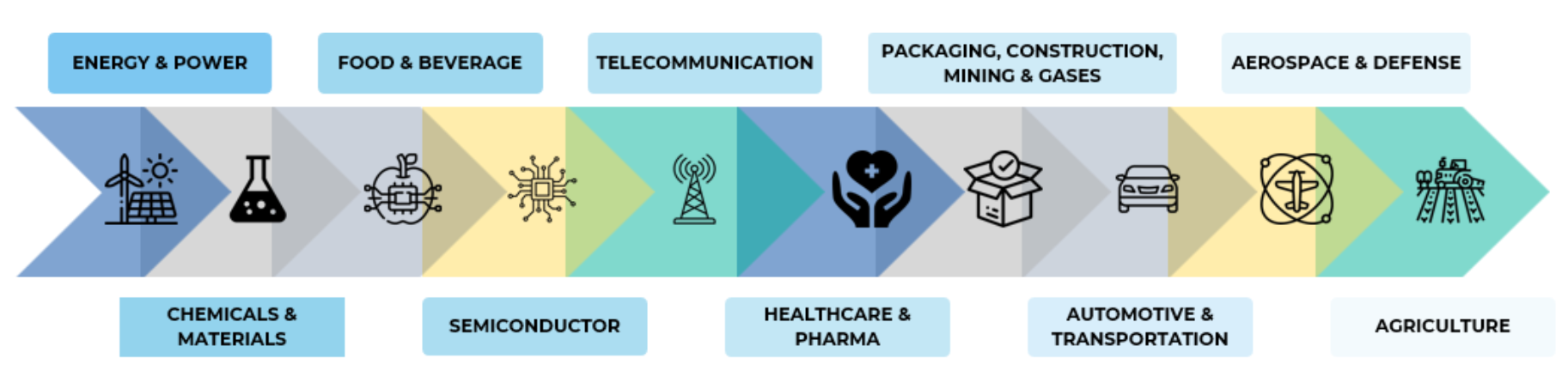
Innovation challenges differ across industries, but the need to identify emerging technologies, evaluate market opportunities, and make informed strategic decisions remains constant. Our technology scouting and innovation intelligence services support organizations across diverse sectors by delivering industry-specific insights tailored to their business objectives.
- Energy & Power
- Chemicals & Materials
- Food & Beverage
- Semiconductor
- Telecommunication
- Healthcare & Pharma
- Packaging & Construction
- Mining & Gases
- Automotive & Transportation
- Aerospace & Defence
- Agriculture
Why Choose Us
Technology scouting is most valuable when it goes beyond identifying emerging technologies and delivers insights that support informed business decisions. A successful scouting program combines scientific expertise, technology intelligence, market analysis, and strategic evaluation to ensure that every recommendation aligns with business objectives.
Our consulting approach focuses on delivering practical, evidence-based insights that help organizations evaluate technologies, identify opportunities, and reduce uncertainty throughout the innovation journey.
What sets our approach apart is:
- Comprehensive technology intelligence across multiple innovation sources
- Industry-specific expertise supported by multidisciplinary research teams
- Structured evaluation frameworks for technology and market assessment
- Integrated technology, market, and competitive intelligence
- Actionable recommendations tailored to business objectives
- Customized engagements designed around each organization’s innovation priorities
Rather than providing large volumes of information, the focus remains on delivering relevant insights that enable organizations to accelerate innovation, strengthen R&D, identify growth opportunities, and make confident strategic decisions.
Frequently Asked Questions
1. What is technology scouting?
Technology scouting is the process of identifying, evaluating, and monitoring emerging technologies, research developments and innovation opportunities that support strategic decision-making.
2. Why is technology scouting important?
Technology scouting helps organizations discover emerging technologies early, reduce innovation risks, strengthen R&D, identify collaboration opportunities, and make informed technology investment decisions.
3. What sources are used during technology scouting?
Technology scouting combines information from patent databases, scientific literature, industry reports and conferences to provide a comprehensive view of emerging technologies.
4. How is technology scouting different from market research?
Market research primarily focuses on customer demand, competitors, and market trends, whereas technology scouting identifies emerging technologies and evaluates their relevance for future innovation.
5. How long does a technology scouting project take?
The duration depends on the scope and objectives of the project. Focused technology scouting studies may take a few weeks, while comprehensive technology landscape assessments covering multiple domains typically require longer timelines.
6. What are the key deliverables of a technology scouting engagement?
Typical deliverables include technology scouting reports, technology landscape analysis, startup scouting reports, material scouting studies, white space analysis, company mapping, market potential assessments, competitive benchmarking, pricing analysis, and strategic recommendations.
Ready to explore your next innovation opportunity? Get in touch with our experts to discuss your innovation scouting requirements.